
Two-season glass film
Low-E Film for Tucson's Single-Pane Buildings
Tucson can post a 75 degree January afternoon and a frost on the windshield the next morning. Low-E window film helps old single-pane glass cope with that swing, and with the long cooling season that follows.
 Tucson
What Low-E Window Film Does on Tucson Glass
Every warm object in a room gives off heat as invisible long-wave radiation. Bare single-pane glass absorbs that radiation and passes it outside, which is why sitting next to an old window on a winter evening feels colder than the thermostat says. Low-emissivity film carries a very thin coating on its room-facing side. Radiant warmth from people, furniture and heaters strikes the coating and is sent back into the space.
The same film also turns away part of the incoming solar energy in summer. That gives it a two-season job, which matters in a desert basin like Tucson. Dry air and clear skies let the ground and buildings shed heat fast after sunset, so winter nights on the east side, along the washes and in low spots near the Santa Cruz River can drop near or below freezing while afternoons stay mild.
Low-E Film for Tucson Schools, Churches and Mid-Century Offices
A lot of Tucson's institutional glass dates from decades when energy was cheap. Mid-century school buildings have long banks of single-pane classroom windows in steel frames. Churches have tall nave windows and glass entry walls. Midtown office buildings from the 1960s and 1970s along Broadway, Speedway and Swan often still carry their original tinted single glazing. Replacing all of it means scaffolding, demolition, new frames and a project schedule measured in months.
Film is a lighter intervention. It goes on in place, room by room, and the building stays in use. Teachers stop moving desks away from the windows in December, and offices stop running space heaters under their desks on February mornings. Summer and winter breaks are natural install windows for schools, and offices can phase work by floor over a few evenings.
- Steel-framed classroom windows in older schools
- Nave, entry and fellowship hall glass in churches
- Original single glazing in Midtown office buildings
- Historic buildings where new windows are not an option
Low-E Film on Historic Glass in El Presidio and Armory Park
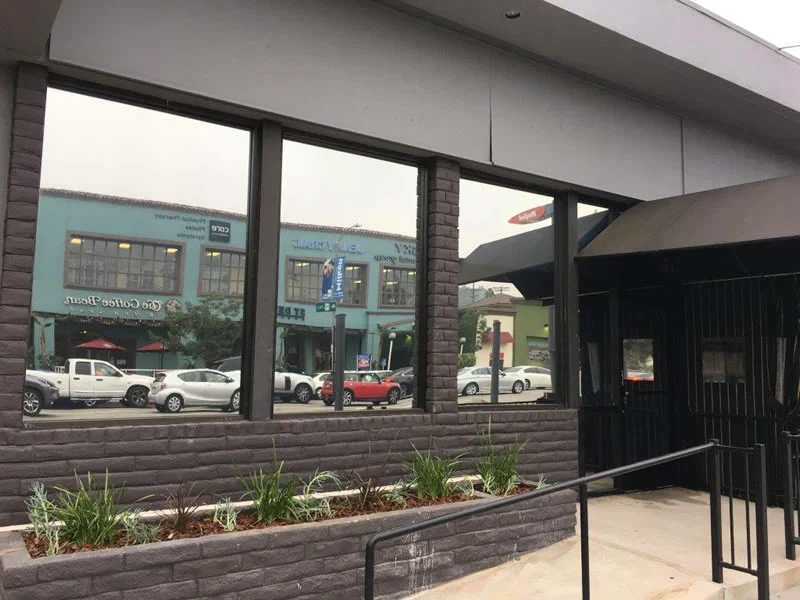
Downtown and the historic neighborhoods around it hold buildings whose windows are part of what makes them historic. In El Presidio, Armory Park and Barrio Historico, swapping original wood sashes for new units can be restricted, and many owners would not want to do it anyway. A film applied to the room side of the existing glass leaves the sash, the putty and the exterior look alone, and it can be stripped later. If your building sits in a historic zone, confirm with the city's preservation staff before work starts.
Old glass needs a careful look first. Thin, wavy or cracked panes can fail under any film, so we inspect each lite and leave any doubtful one untouched. We favor low-reflectance products on historic facades so the building does not suddenly look mirrored from the street.
Low-E Film or New Windows: Making the Call in Tucson
New insulated windows with a factory low-E coat will outperform film on single glazing. They also cost several times as much, take longer to source and install, and may trigger design review on older buildings. When frames are sound and the glass is intact, film is a reasonable way to improve comfort this year and push a replacement project down the road.
On buildings that already have modern dual-pane low-E units, the math changes. Adding a low-E film on top usually brings little extra, and some combinations raise thermal stress. In those cases we may suggest a different solar film for the hottest elevations or advise leaving the glass alone. We check the glazing before recommending anything.
Low-E Window Film Results in Tucson Buildings
Less Heat Lost Through Single-Pane Glass at Night
On cold, clear Tucson nights the coating sends radiant warmth back into the room. Spaces near old windows lose heat more slowly, and classrooms and offices feel less chilly when people arrive in the morning.
Summer Solar Heat Rejection From the Same Film
In July the same coating rejects a portion of the solar load. One installation addresses both seasons, which suits a desert climate where single-pane glass is a problem year-round.
Low-E Film at a Fraction of Replacement Cost
Upgrading the glass in place avoids new frames, demolition and long lead times. Buildings with sound windows gain comfort now and can plan a full replacement later if it still makes sense.
Original Historic Windows Stay in Place
Because the film sits on the room side of the existing pane, original wood or steel sashes stay where they are. That makes it a practical fit for older Tucson buildings where replacement is restricted or simply unwanted.
Low-E Film Questions for Tucson Building Owners
Does low-E film make sense on newer dual-pane windows?
Rarely. Most modern dual-pane units already have a low-E coat from the factory, so a film on top adds little and can raise glass stress. We check what you have and may point you to a different film or none.
Will low-E film make classrooms or offices darker?
Many low-E films are fairly light, though some carry a slight tint or sheen. Samples on your actual glass, viewed in daylight, are the best way to decide.
Can low-E film go on windows in a Tucson historic zone?
Often, provided the glass is sound. It sits on the inside face and is reversible. Check with the city's preservation staff first if the building is in El Presidio, Armory Park or another historic zone.
What cleaning routine does low-E film need?
Once cured, a soft cloth and a gentle ammonia-free cleaner are enough. Scouring pads and blades can scratch the coating, so the custodial crew should get our care sheet.
Window film quote
Price Low-E Film for a Tucson Building
Tell us the building type, whether the glass is single or dual pane, and roughly how many windows are involved. The quote form accepts photos too, and we answer with low-E options and pricing.
Prefer email? info@windowfilmtucson.pro